Warehouses present a different set of spill risks compared to factories or workshops. The volumes are often smaller, but the frequency can be higher — and the consequences of a poorly handled spill on a polished concrete floor with forklifts moving at speed can be serious. This guide covers the main risks and how to address them.
Common Warehouse Spill Risks
Most warehouse spills fall into a few predictable categories:
- Forklift battery acid. Electric forklifts use lead-acid batteries that can leak sulphuric acid if damaged, tipped, or poorly maintained. This is a chemical hazard and requires a chemical or universal spill kit — not an oil-only kit.
- Loading bay fuel spills. Diesel from delivery vehicles, hydraulic fluid from tail lifts, and oil drips from HGV engines are common at loading docks. These are hydrocarbon spills, best handled with oil-only absorbents.
- Pallet storage leaks. Damaged goods on pallets — anything from cooking oil to cleaning chemicals — can leak onto racking and floor areas. The liquid type is unpredictable, which makes universal spill kits the practical choice for general storage aisles.
- Rainwater and oil mix. Semi-open loading bays and yard areas collect rainwater that mixes with oil drips. Oil-only absorbents are needed here because they repel water and selectively absorb the hydrocarbon.
Kit Placement Strategy
In a warehouse, the biggest mistake is having one large spill kit in a corner that nobody can get to quickly. Speed of response is critical — a spill on a smooth warehouse floor will spread fast, and a wet floor with forklift traffic is a serious slip and collision hazard.
We recommend the following placement approach:
- Loading bays: one oil-only kit per active bay, mounted on the wall or in a clearly marked bin near the dock leveller.
- Forklift charging areas: one chemical or universal kit near the battery charging station.
- Every other aisle or zone: a small universal kit (20–50 litres) at the end of each major racking run, or at regular intervals along the main traffic routes.
- Goods-in inspection area: a universal kit where incoming goods are checked and damaged items are most likely to be identified.
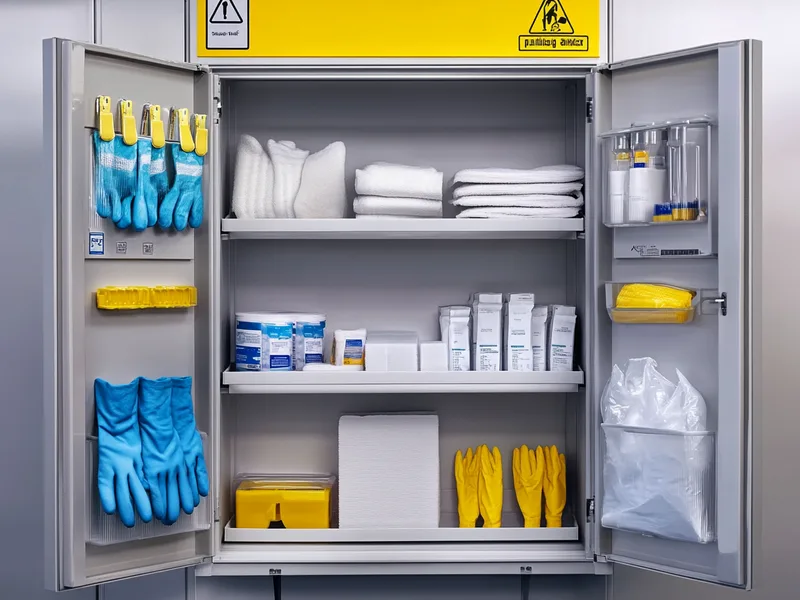
For larger warehouses, a permanent spill response station at a central point gives you a larger reserve that can be deployed to any area as a backup to the smaller distributed kits.
Sizing for Warehouse Environments
Most warehouse spills are relatively small — 5 to 50 litres is typical. A 20-litre kit handles the vast majority of day-to-day incidents. However, you need to plan for the worst case: a full drum failure or a pallet of liquid goods collapsing.
For areas where full drums or IBCs are stored, size your kits according to the 110% rule. For general aisles where the risk is smaller product leaks, 20–50 litre kits are proportionate and practical.
Recommended Kit Types
For most warehouse operations, you will need a combination:
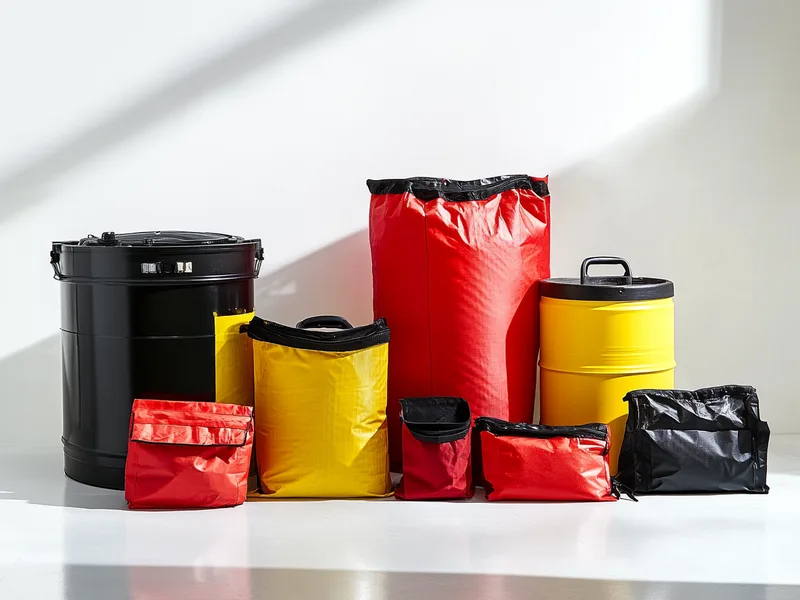
- Universal kits (grey) for general storage areas where the liquid type is mixed or unknown.
- Oil-only kits (white) for loading bays and external yard areas.
- Chemical kits (yellow) if you store or handle hazardous substances, or if your forklifts use lead-acid batteries.
If you are setting up spill response for a warehouse for the first time, get in touch and we can recommend a layout based on your floor plan and risk profile.